












codex-by-openai-3
A command center for working with agents
OpenAI Wants to Be Your Engineering Manager Now
The Macro: Everyone’s Building a Dev Agent Platform, OpenAI Just Has Distribution
The AI coding assistant market is already crowded in a way that makes task management software look simple. Task management figures vary wildly depending on the source, anywhere from $537 million to $11.48 billion by the early 2030s, which is a spread wide enough to park a continent in. The directional agreement holds, though: double-digit CAGR, AI as the primary growth driver, every serious software company trying to wedge into developer workflows.
Cursor built a whole IDE around it and reportedly crossed meaningful revenue thresholds fast. GitHub Copilot has Microsoft’s distribution behind it and has been quietly embedding itself into enterprise teams for two years. Claude keeps showing up in head-to-head comparisons as the model developers actually prefer for complex reasoning. And now OpenAI is making a more explicit play not just for the coding assistant slot, but for the orchestration layer sitting above it.
The framing has shifted.
Nobody’s pitching autocomplete anymore. The pitch is agentic: let AI handle tasks that span hours, days, or weeks, and have a human supervise the output rather than author the input. That’s a real and interesting product problem. The bottleneck genuinely moved from “can the model write good code” to “can a developer effectively direct five agents running in parallel without losing their mind.” IDEs weren’t built for that. Terminals weren’t built for that. That’s the gap OpenAI is explicitly targeting with Codex.
The question isn’t whether the problem is real. It is. The question is whether OpenAI is the right company to own that layer, or whether they’re just the biggest one trying.
The Micro: A macOS App That Wants to Be Your Agent Dispatch Tower
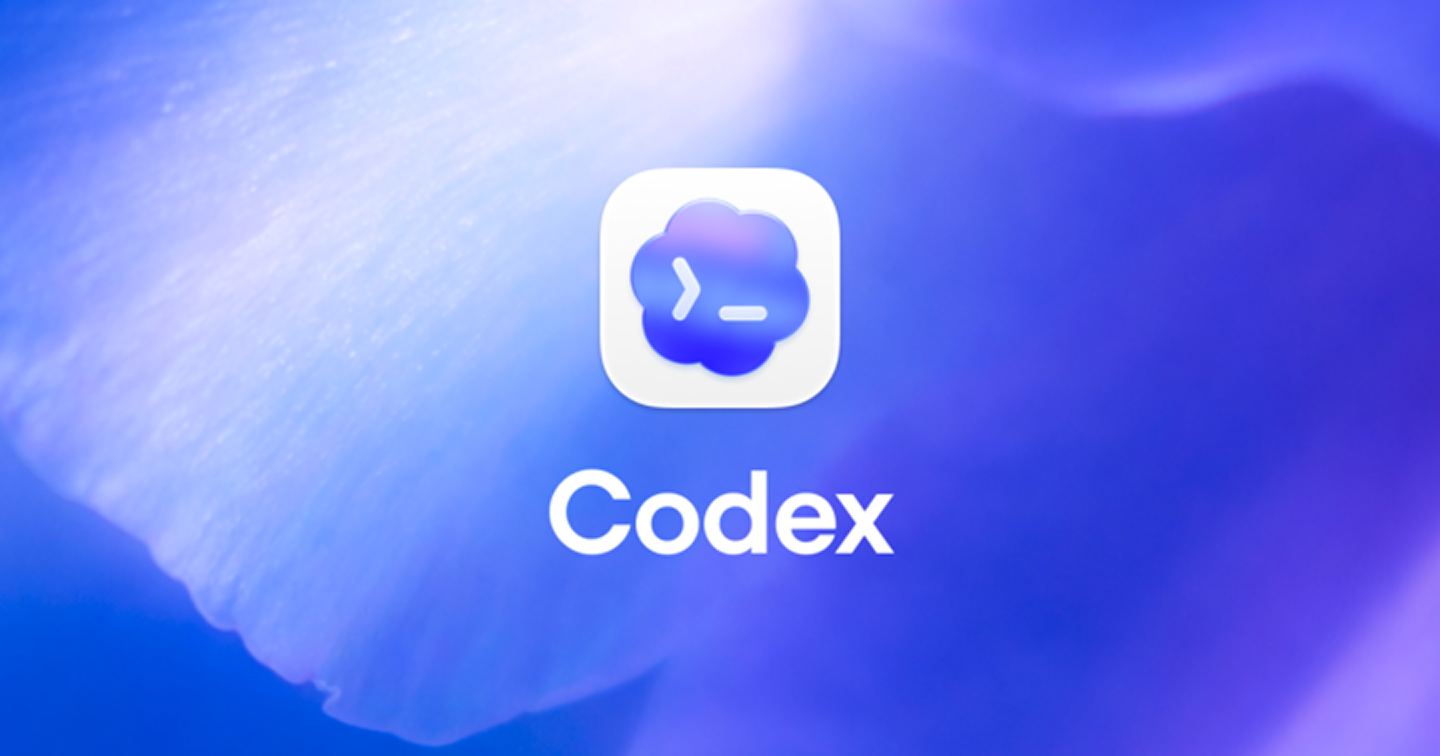
The Codex app is macOS only, currently waitlisted, and built as a dedicated interface for managing multiple coding agents at once. Not a plugin, not a chat window bolted onto an existing IDE. A standalone app built around the assumption that you will be running several agents simultaneously across different tasks, and that the interesting work is coordination, not generation.
OpenAI’s product page says the app supports parallel workflows and long-running tasks. Agents that don’t wrap up in thirty seconds but persist across sessions, potentially spanning days. That’s a meaningful architectural claim. Most AI coding tools today are still fundamentally request-response: you ask, it answers, you review. Codex is positioning around something closer to async delegation. Assign work, check in, redirect.
It got solid traction on launch day. OpenAI also ran a promotion alongside the release, Codex access included temporarily with ChatGPT Free and Go tiers, plus doubled rate limits on paid plans. That’s a distribution move as much as a product one.
The technical foundation is Codex the model, launched April 2025, already accessible via CLI and IDE integrations. The app is the interface layer on top of that. OpenAI is betting that managing agents is enough of a distinct UX problem to warrant a purpose-built surface. That’s a defensible bet. Whether the app actually delivers on it is something you can’t fully assess from the outside, given the waitlist situation.
The macOS-only constraint is either a pragmatic starting point or a signal that this is built for a specific kind of developer. Probably both.
The Verdict
Codex-the-app is solving a real problem. Agent orchestration is genuinely unsolved UX territory. OpenAI is still an odd company to trust with it, though. Not because they lack capability, but because their track record on sustained product focus outside of ChatGPT is spottier than their model work. They build impressive things and then sometimes just move on.
At 30 days, the signal to watch is waitlist throughput. If access stays restricted while Cursor and Claude-based tools stay open, developers will route around the bottleneck. At 60 days, does the “long-running tasks” claim hold up in real workflows, or does it turn out to mean “a few hours, actually”? At 90 days, is there an enterprise offering with audit and compliance features that make this viable for teams where “an agent did it” isn’t a sufficient paper trail?
What I’d want to know before fully endorsing it: retention numbers from early access users, and whether the parallel agent experience actually reduces cognitive load or just redistributes it.
Coordinating five agents badly is worse than running one well.
This is worth watching. It’s not worth the hype it will inevitably receive from people who haven’t used it yet, which at this stage might actually be everyone.
Also featured on HUGE: Astro Energy Uses AI to Find Land for Renewable Energy Projects Before Anyone Else Knows It’s Valuable · Bindwell Is Using AI to Design Pesticides and Paul Graham Thinks They’ll Do Alright · Enhanced Radar Is Building AI for Air Traffic Control and I Think They Might Actually Pull It Off